How UX Helps Businesses Drive Growth in 2026
Picture this: a potential customer lands on your website. Their patience is thin, and a dozen alternatives are one click away. Can your site hold their attention and lead them smoothly toward becoming a loyal customer? That is where UX comes in, and in 2026 it is one of the strongest levers a business has. With the right UX strategy, you can turn complicated interfaces into experiences people enjoy and come back to.
What Is UX?
User experience, or UX, is the relationship between a product or service and the people who use it. It is an interdisciplinary field that aims to give users relevant, meaningful experiences.
- UX design looks at everything that shapes a user’s experience with a product or service, including how those elements make the user feel and how easily they can complete their tasks.
- It covers everything from how a physical product feels in your hand to how straightforward the checkout is when you buy something online.
- The goal is experiences that are easy, efficient, relevant, and pleasant.
How UX Design Helps Businesses
Increased Revenue and Conversions
UX design drives revenue and conversions in two main ways:
- Smooth user journey: A clear, intuitive path helps users reach their goals, which leads to more purchases, sign-ups, and other desired actions.
- Reduced friction: When you remove frustrating elements, fewer people abandon their carts or forms.
Case Study: Moz
Moz, the SEO software company (then known as SEOmoz), improved its conversions by redesigning its sign-up pages based on user feedback. According to the published case study, the work paid off significantly.
The process started with interviews with current, former, and free-trial customers:
- Paying customers were asked what they liked about the service and how they would describe it to a friend.
- Free-trial users were asked what would motivate them to subscribe, what they liked most, and what their SEO workload looked like.
- Former customers were asked why they canceled and what would bring them back.
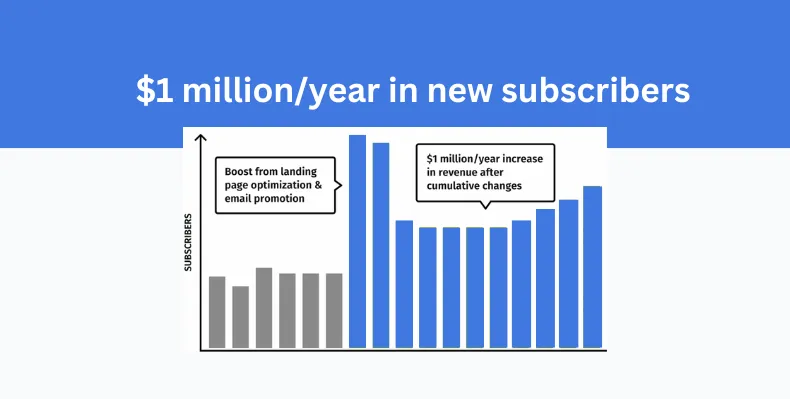
Next, the team built wireframes and tested them with Moz’s user community. The final design was then split-tested against the original version, which confirmed the improvement in sales of the PRO membership.
Customer Satisfaction and Loyalty
- Positive experience: An enjoyable, easy-to-use product creates happy customers who return and recommend your business.
- Trust: A well-designed product shows that you pay attention to user needs, which builds trust in your brand.
Airbnb is a good example of a company that uses UX to build trust:
- Host profiles and reviews: Travelers can see host photos, details, and reviews.
- Secure payments: Airbnb processes payments securely and releases them to the host after check-in, which protects both guests and hosts.
- Clear communication: Listings, pricing, and cancellation policies are presented transparently.
- Ratings from both sides: Guests and hosts can leave reviews, so people make decisions based on real experiences.
Reduced Costs and Improved Efficiency
- Less support needed: An intuitive design reduces confusion, which means fewer support requests and lower support costs.
- Fewer development errors: UX research uncovers usability problems early, before they turn into costly rework.
Competitive Advantage
- Stand out: In a crowded market, a product that is easy to use can differentiate your business and attract new customers.
- Stronger brand image: Positive experiences build a reputation that helps you attract and keep customers.
Additional Benefits
- Accessibility: Good UX makes sure everyone can use your product, including people with disabilities, which expands your reach.
- Data-driven decisions: UX design relies on user research and data analysis to meet real user needs.
- Usability: This is the ease of use and effectiveness of a product for all users, regardless of their abilities. It covers how well people can learn and use a system, and how satisfied they are with the experience. Here is a well-known explanation of usability in UX design:
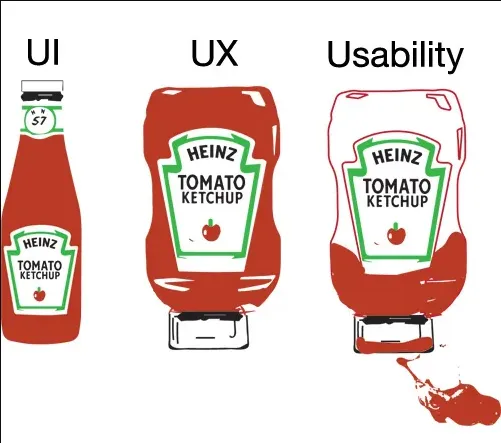
Without good design, even something as simple as a ketchup bottle becomes frustrating.
How Can UX Increase Revenue?
Could changing one button on a website raise annual revenue by hundreds of millions of dollars? A widely told UX story, known as “The $300 Million Button,” says it can. We cannot verify every detail of it, so treat it as an illustration of the idea rather than a documented case.
The story goes like this. Shoppers on an e-commerce site had to create an account before they could pay. Many abandoned their carts instead. The fix was simple: a prominent “Guest Checkout” option, so shoppers no longer had to fill in long forms just to buy.
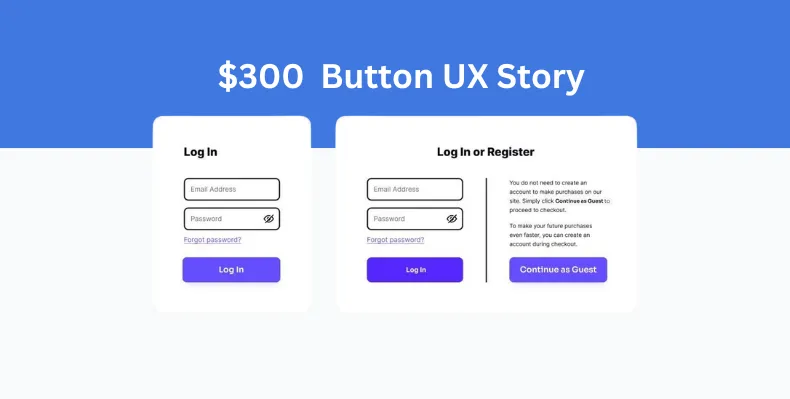
Whatever the exact numbers, the lesson holds. Removing needless steps from checkout is one of the most reliable ways to reduce abandoned carts.
Conclusion
Prioritizing user experience is not a luxury. It is a strategic necessity. By investing in UX design and seamless interactions, businesses build customer loyalty, increase satisfaction, and drive sustainable growth. As customer expectations keep rising, companies that make UX a core part of their strategy will be the ones that thrive.
Looking for a UX partner? OneK specializes in UX design services that make every interaction with your product intuitive, efficient, and enjoyable. Contact OneK to get started.